Design
The Design Philosophy Behind VYBE 43
Date
February 15, 2026
Category
Design
Read Time
11 min read
Every surface, every radius, every material choice on the VYBE 43 traces back to a single conviction: that form and function are not competing forces but complementary disciplines. Designed in Viareggio, at the beating heart of Italy's superyacht coast, the VYBE 43 represents a new chapter in performance yacht design — one that refuses to separate engineering from aesthetics.
Every line of the VYBE 43 exists for a reason. Our design philosophy begins with a conviction that has guided Italian naval architecture for generations: form follows function — but both must be extraordinary.
Built in Viareggio, at the heart of Tuscany’s superyacht district, the VYBE 43 draws from a tradition that produced some of the most celebrated vessels on the Mediterranean. The Versilia coast has been home to yacht builders since the early twentieth century, and this heritage — a culture where craftsmanship, precision, and an uncompromising eye for beauty intersect — runs through every decision we make. Yet the VYBE 43 refuses to simply inherit that legacy. It challenges it.
The ambition was clear from the outset: to create a luxury performance yacht that stands apart not through ornamentation but through the purity and intelligence of its lines. A yacht that communicates its capabilities before you step aboard, and exceeds them once you do.
Where Aerodynamics Meet Aesthetics
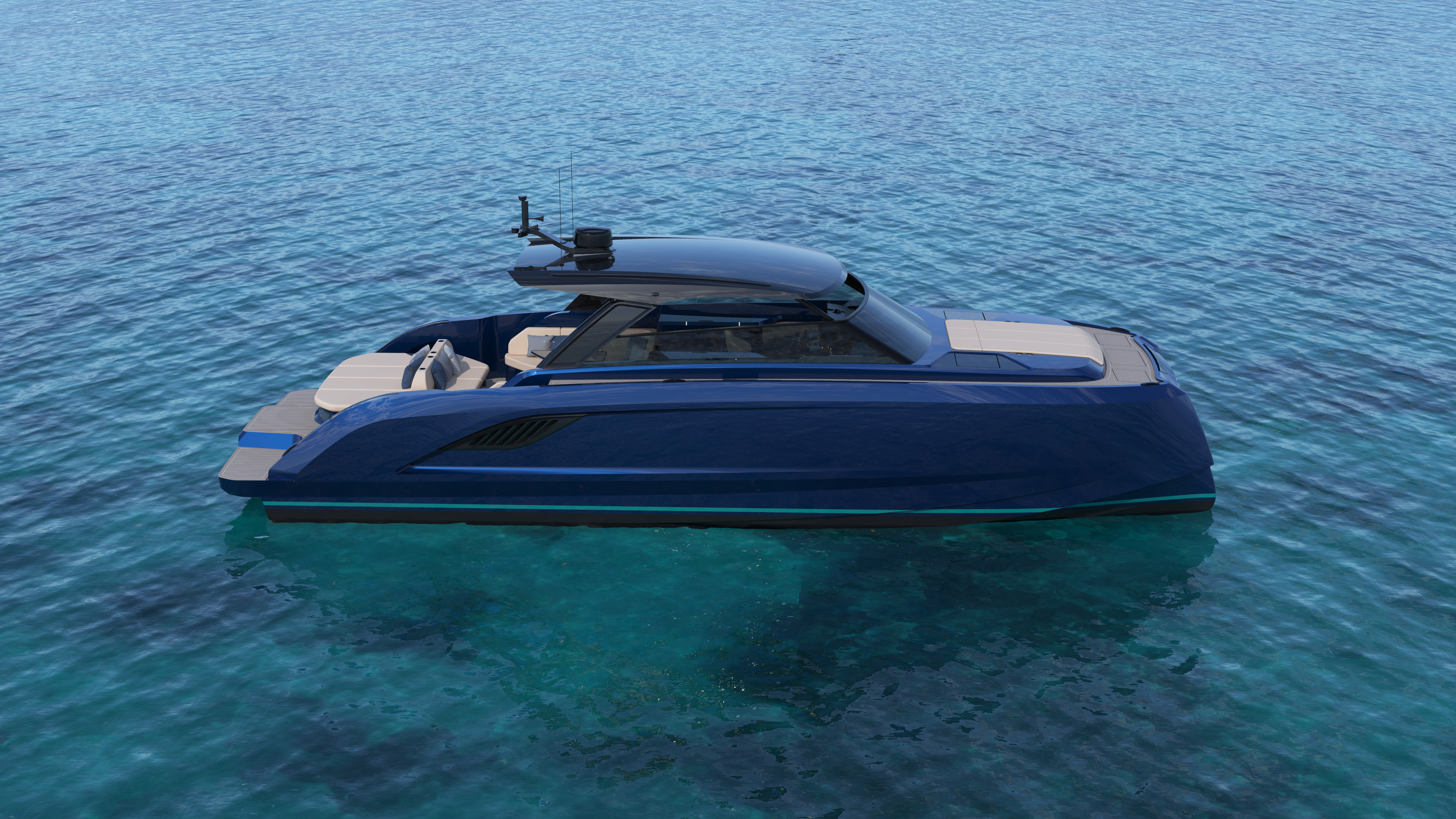
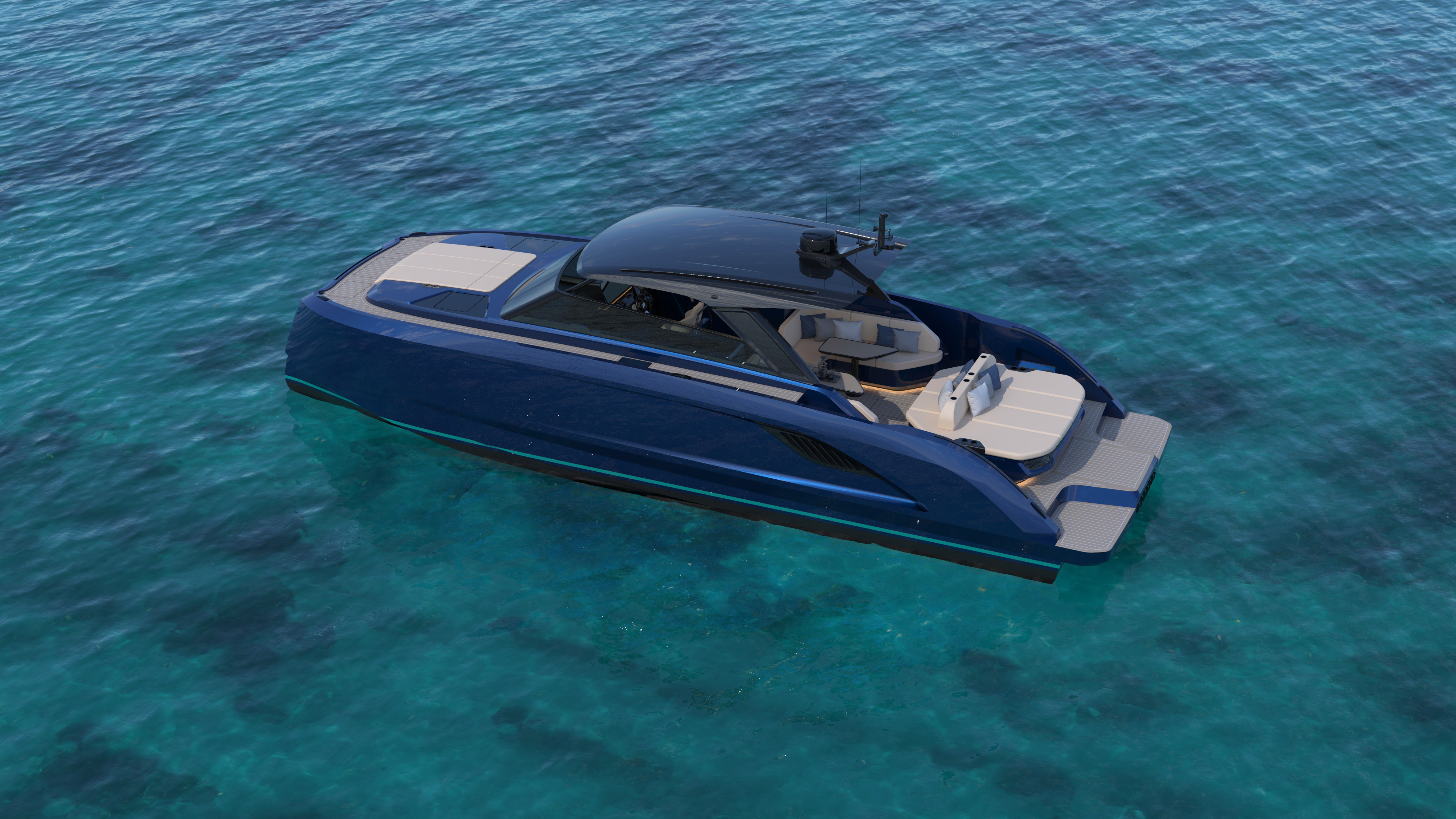
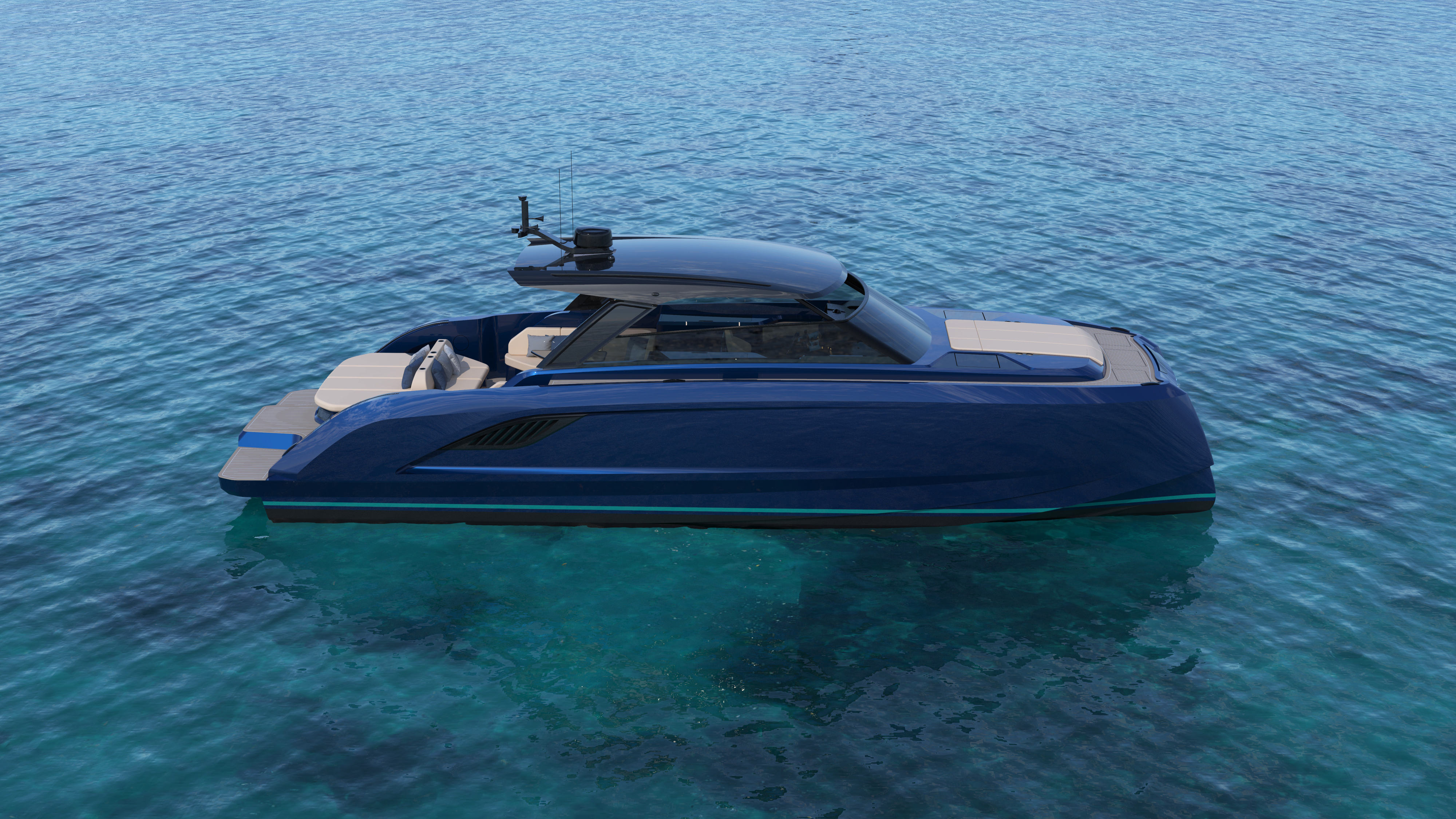
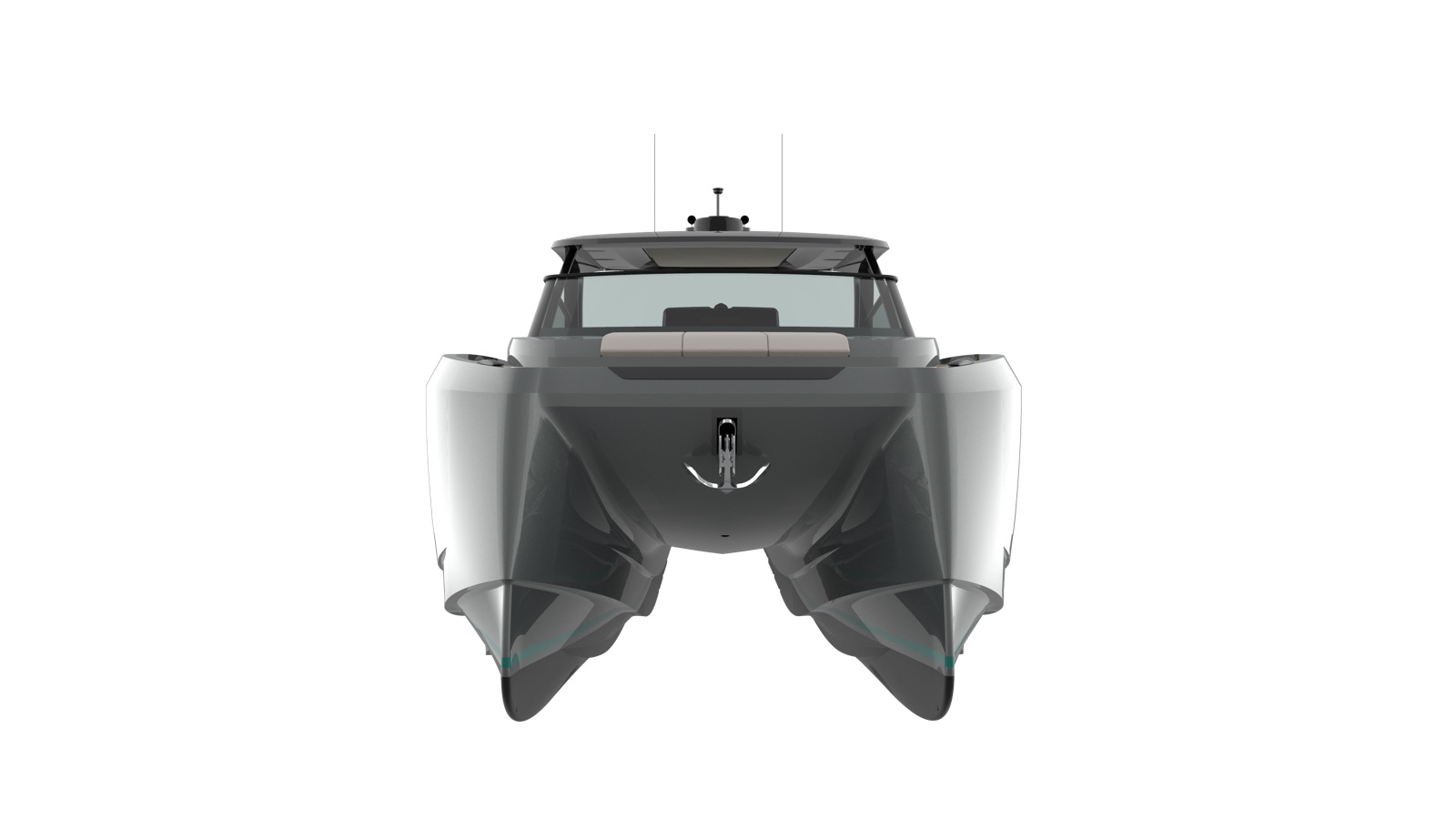
The aggressive bow line wasn’t drawn for aesthetics alone — it channels airflow to reduce drag at speed, contributing to the VYBE 43’s remarkable efficiency at 40+ knots. Every curve on the superstructure has been validated through computational fluid dynamics, ensuring that the shape you see is the shape the wind confirms.
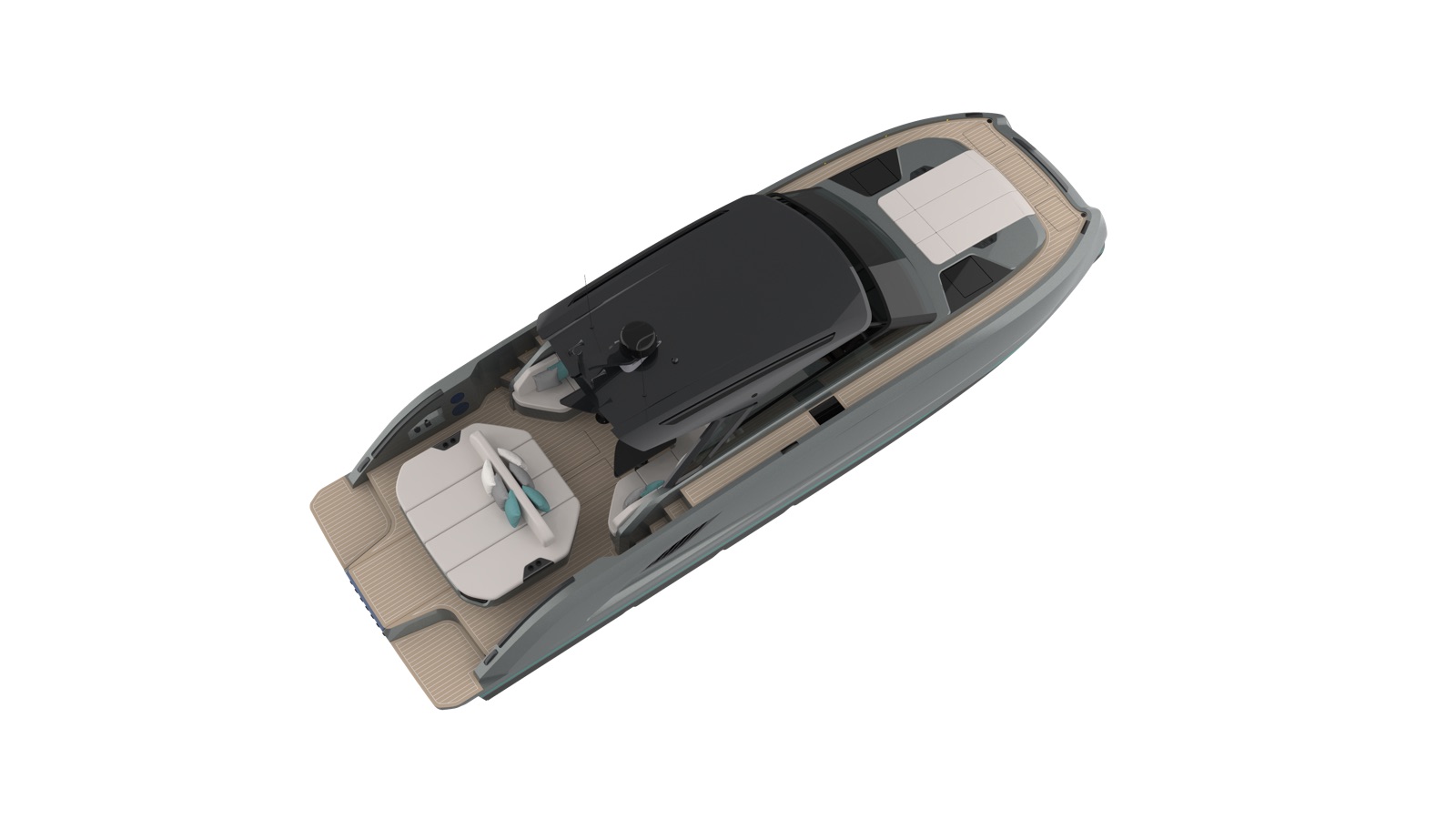
The sweeping hardtop isn’t merely a shelter from the Mediterranean sun — its shape has been refined through extensive CFD modelling to minimise turbulence in the cockpit, allowing conversation at cruising speed without raising your voice. The airflow accelerates over the windscreen, is guided smoothly across the hardtop’s cambered surface, and exits cleanly at the trailing edge. The result is a cockpit environment that feels calm and controlled even at 30 knots — a feat that most yacht designers in the 40-foot class have accepted as impossible.
Every surface has been interrogated. Every radius questioned. The transition from hull to gunwale, from gunwale to coaming, from coaming to hardtop — each junction is a continuous flow, not a series of joints. This isn’t decoration; it’s aerodynamic discipline applied with an Italian eye.
A New Design Language for Performance Yachts
When we set out to create the VYBE 43 in our Viareggio studio, we knew we couldn’t simply iterate on existing designs. The sport yacht market in the 40 to 50-foot segment had stagnated — variations on familiar themes, incremental improvements dressed as innovation. The brief was unambiguous: create a performance yacht that is instantly recognisable from any angle, at any distance — one that stands apart in any marina from Saint-Tropez to Porto Cervo.
The result is a design language built on three pillars:
- Tension — surfaces that feel alive, caught between opposing forces, creating visual dynamism even at rest. The hull sides carry a subtle convexity that catches light differently throughout the day, giving the yacht a living quality that flat-panel designs cannot achieve.
- Flow — seamless transitions from bow to stern, eliminating the segmented appearance that defines most production yachts in the 40–50 foot class. There are no hard breaks in the VYBE 43’s profile. Your eye travels the full length without interruption.
- Precision — every edge, radius, and proportion considered to the millimetre, with tolerances typically reserved for superyacht construction above 80 feet. Panel gaps are held to within 2mm across the entire vessel, a standard that demands tooling and quality control far beyond the production norm.
This design language did not emerge overnight. It evolved through eighteen months of iteration — over forty hull-form studies, dozens of superstructure variations, and a relentless process of elimination that favoured integrity over compromise. What remains is essential: nothing added, nothing missing.
“The VYBE 43 is not a yacht that was designed. It’s a yacht that was distilled.”
The Signature Silhouette
The VYBE 43’s profile is dominated by the sweeping hardtop that begins at the windscreen and flows aft in a single, unbroken gesture. This isn’t just beautiful — it’s structural, providing rigidity without the need for visible supports and creating a clean, uninterrupted line that has become the yacht’s defining visual element.
From the dock, from a passing vessel, from a helicopter overhead — the VYBE 43 is identifiable by this silhouette alone. It’s an intentional design choice: in a crowded marina along the Côte d’Azur, the Amalfi Coast, or the Balearic Islands, anonymity is a failure. The VYBE 43’s profile is its signature, as distinctive as the marques that define automotive excellence.
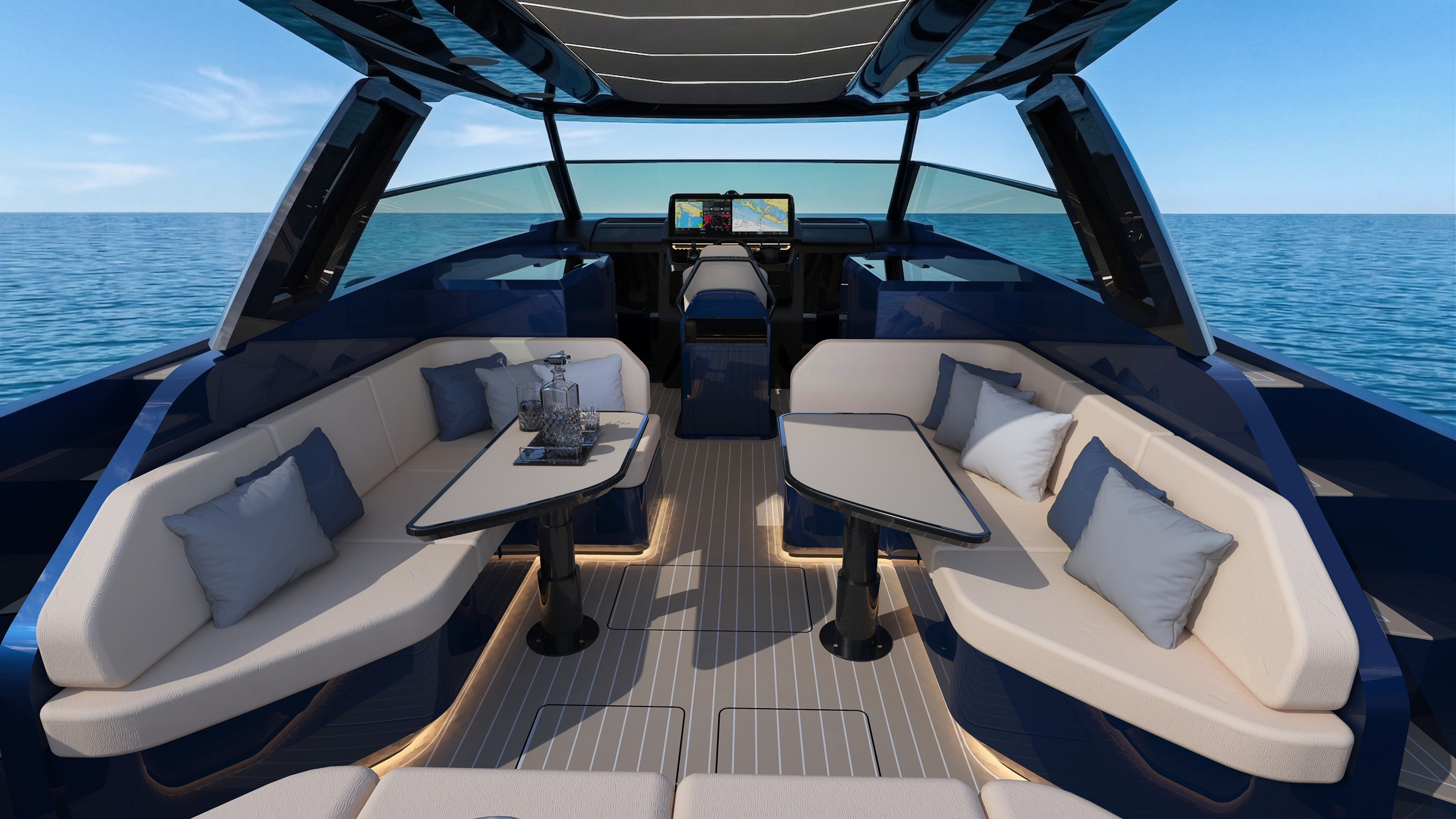
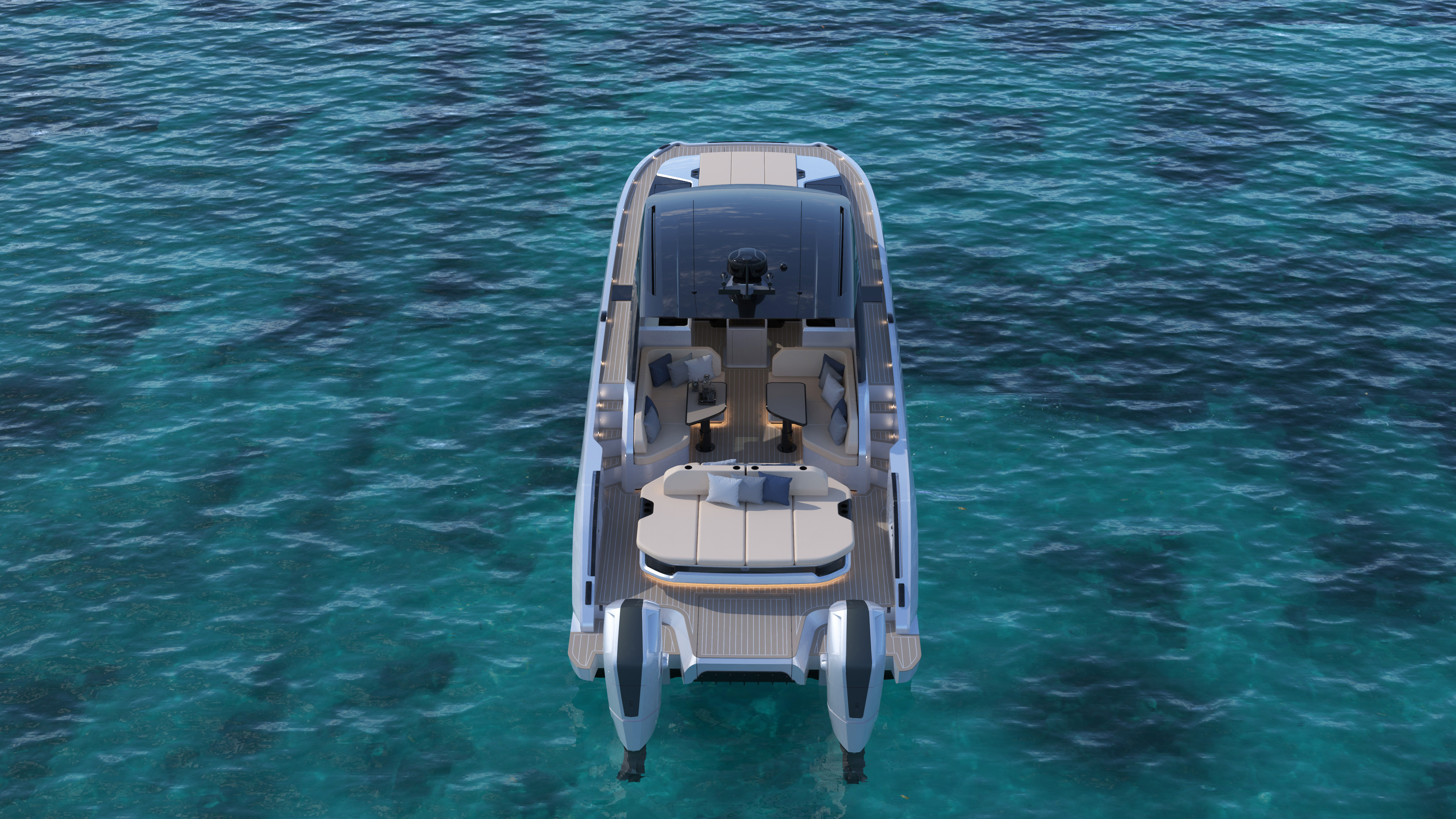
The hardtop also serves a functional purpose beyond weather protection. Its integrated channel system manages rainwater drainage invisibly, eliminating the external gutters and drip edges that compromise the clean lines of lesser designs. LED lighting is recessed into the hardtop’s underside in a pattern calibrated for both ambient mood and practical task illumination — a detail invisible by day, transformative by night.
The Interior Architecture
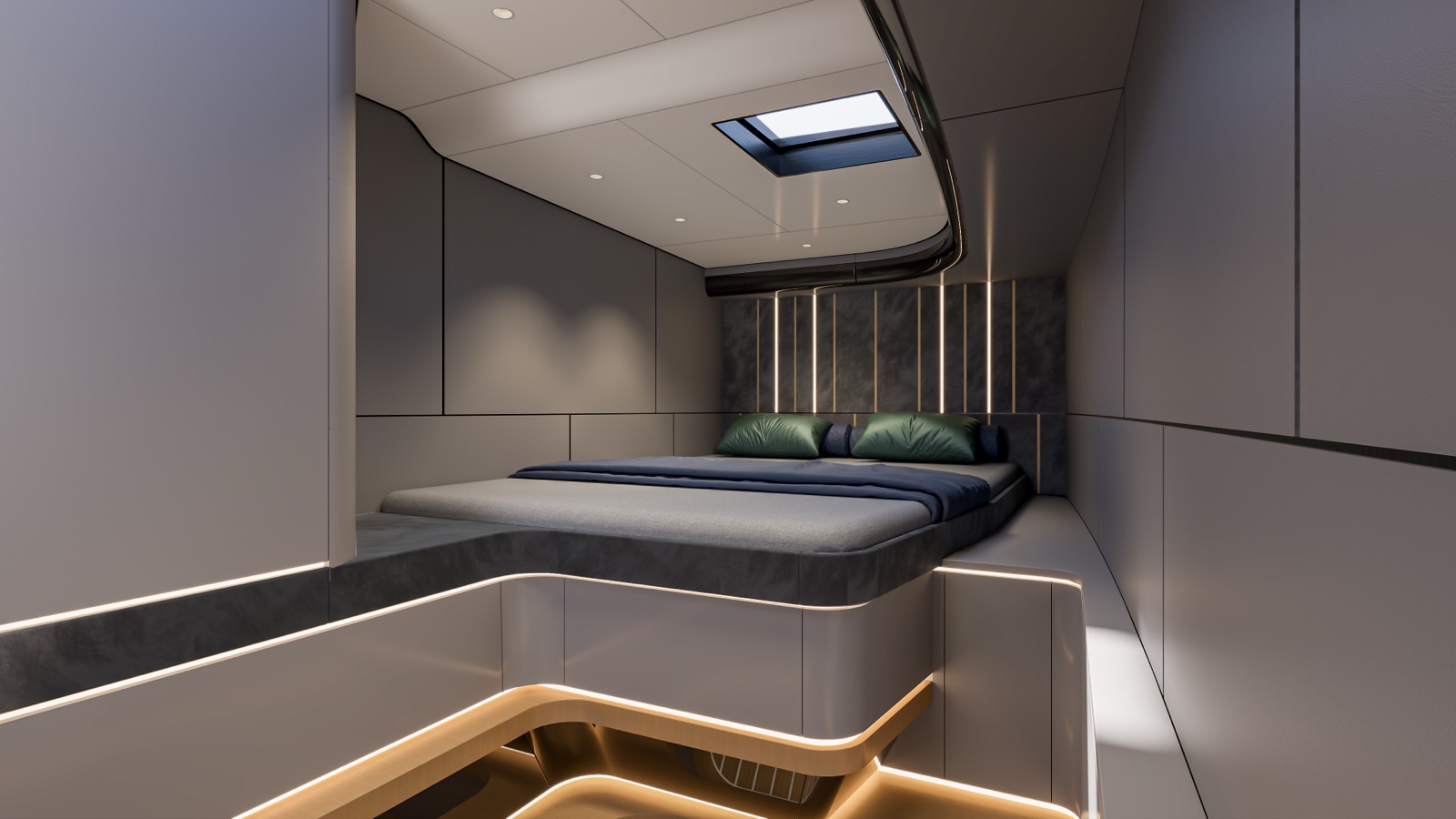
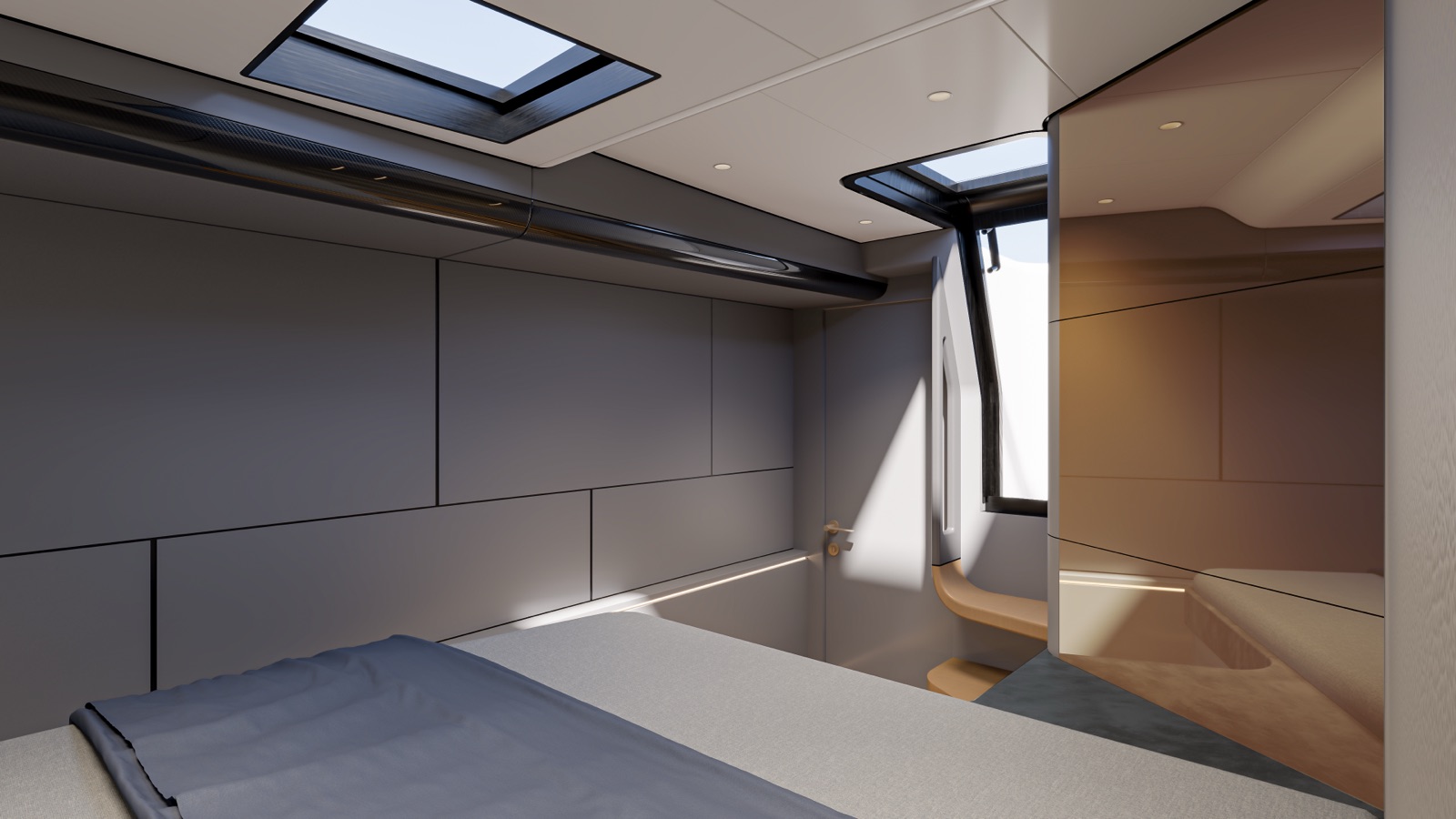
Step below deck, and the design language continues without interruption. The VYBE 43’s interior is not an afterthought appended to an engineered hull — it was designed simultaneously, with the same team, under the same philosophy. The result is a cabin that feels like a natural extension of the deck above, not a separate space.
The forward master cabin runs the full beam of the yacht at its widest point, creating a sense of volume that belies the vessel’s 43-foot length. Headroom reaches 1.92 metres — enough to stand comfortably, a luxury rarely found in this class. Natural light enters through hull windows that are larger than convention allows, made possible by the structural rigidity of the carbon-reinforced hull layup.
Material selection follows the same rigour as the exterior. Hand-finished teak, sourced from sustainable plantations and selected for grain consistency, covers the sole. Brushed stainless steel hardware is machined to tolerances of 0.1mm, creating a tactile precision that reveals itself only upon close inspection. Leather surfaces use full-grain Italian hides, chosen for their ability to age gracefully in the marine environment — patina as a design feature, not a flaw.
The galley, compact but complete, features marine-grade stainless steel countertops and integrated refrigeration that maintains temperature even in the 40°C heat of a Mediterranean August. Every storage compartment has been individually designed to eliminate rattle and movement at speed — a detail that distinguishes a yacht built for real use from one built for show.
Materials That Define Character
Beneath the surface, every material has been selected not for convention but for purpose. The hull combines vacuum-infused E-glass with strategic carbon fibre reinforcement — a hybrid approach that delivers the strength-to-weight ratio demanded by a true performance yacht, without compromising the longevity expected from Italian construction. This isn’t a race boat built to a weight minimum; it’s a vessel engineered for decades of service in demanding conditions.
The carbon fibre deployment follows a philosophy of specificity. Rather than wrapping the entire structure in carbon — an approach that sounds impressive in marketing but introduces its own challenges — the VYBE 43 places carbon exactly where it matters: the keel line, engine mounts, transom structure, and hardtop shell. This targeted reinforcement reduces weight at critical load paths while maintaining the workability and repairability of the E-glass primary structure.
Interior surfaces transition from hand-finished teak to brushed stainless steel with the kind of precision that reveals itself only upon close inspection. It’s the difference between a yacht that photographs well and one that rewards ownership over years. The gelcoat system uses a multi-layer process developed specifically for the Mediterranean’s UV intensity — five coats, each sanded and inspected, producing a depth of finish that deepens rather than degrades with age.
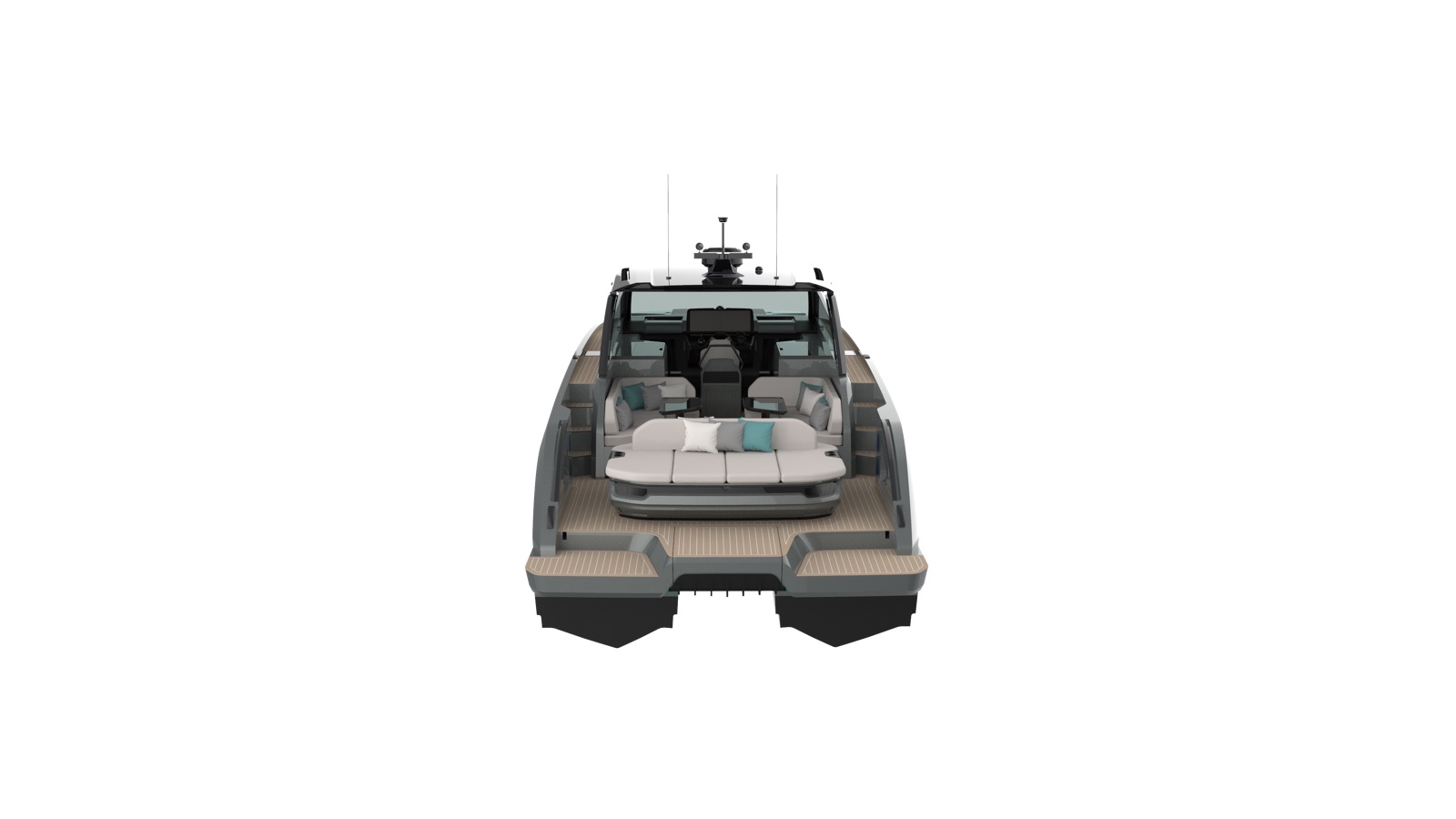
Lighting as Design Element
As the Mediterranean sun drops below the horizon, the VYBE 43 undergoes a transformation that reveals an entirely separate dimension of its design. The lighting system — entirely LED, entirely integrated, entirely invisible by day — was not added to the yacht after design completion. It was designed into the yacht from the first sketches.
The ambient lighting follows three zones: the cockpit, the helm station, and the cabin. Each zone operates independently with adjustable colour temperature, from a warm 2700K for relaxed evening dining to a cooler 4000K for night navigation tasks. The transition between zones is gradual, avoiding harsh boundaries of light and shadow.
Underwater lighting transforms the stern area into a theatrical stage, illuminating the water beneath the swim platform with a cool teal glow that extends several metres into the Mediterranean — a visual effect that is as practical for late-night swimming as it is striking from the dock. These are not aftermarket accessories; they’re built into the hull laminate, sealed against the marine environment for the life of the vessel.
The Design Studio in Viareggio
The VYBE 43 was born in a converted boatyard office overlooking the Porto di Viareggio — the same harbour where Azimut, Benetti, and Perini Navi shaped the modern superyacht industry. The design team is deliberately small: six people who share a conviction that great design is not a committee outcome.
The studio’s process combines digital precision with physical intuition. Every hull form begins in CFD simulation, but critical design decisions are validated with physical models — 1:10 scale models hand-shaped in foam, placed under raking studio light to study how surfaces interact with shadow and reflection. This is how the VYBE 43’s subtle hull convexity was discovered: not on screen, but in a model maker’s hands, under the Tuscan light that has informed Italian design for centuries.
The proximity to Viareggio’s network of marine specialists — laminate engineers, metalworkers, upholsterers, electricians — means that design intent and manufacturing reality are never far apart. A question about a radius can be answered by walking fifty metres to the lamination shop. A material sample can be in hand within the hour. This density of expertise, concentrated along a few kilometres of the Versilia coast, is Viareggio’s true advantage — and the VYBE 43’s foundation.
Designed for the Mediterranean, Built for the World
The VYBE 43 was conceived for the conditions where it will spend most of its life: the Mediterranean basin, from the Balearics to the Aegean, from the Amalfi Coast to the French Riviera. The prevailing conditions — short, steep chop generated by afternoon thermal winds, strong currents in straits and channels, the relentless UV exposure of 300+ sunshine days per year — have informed every design decision.
But the principles that make the VYBE 43 excel in the Mediterranean — efficiency, stability, uncompromised space, and materials selected for longevity — translate to any water, any latitude. Owners have expressed interest from the Caribbean to Southeast Asia, from the Norwegian fjords to the coast of Western Australia. The yacht’s design philosophy is universal even if its birthplace is specific.
This is what happens when design isn’t a department. It’s a discipline. When every line is questioned, every surface justified, and every compromise resisted — the result isn’t just a yacht. It’s a statement about what performance yachting should be.
Continue Exploring
Discover More
Explore the craftsmanship and innovation behind every VYBE.